Fumigation Industry Insights | Methyl Bromide: Exclusive to High-Risk Cargo Inspection and Quarantine


Tag:Industry News
 2026-07-28
Methyl bromide is widely recognized as a versatile and high-performance fumigant in import/export quarantine fumigation. Although regulated under the Montreal Protocol, it is exempted for quarantine and pre-shipment (QPS) uses.
Sulfuryl fluoride is primarily used on routes to the Americas, Europe, and Australia. On September 12, 2024, the European Commission decided not to renew the approval of sulfuryl fluoride as an active substance for biocidal products in Product-Type 8 (wood preservatives) and Product-Type 18 (insecticides, acaricides, etc.) [1]. Its use for stored-grain fumigation has been extended until January 31, 2027, and is still under evaluation.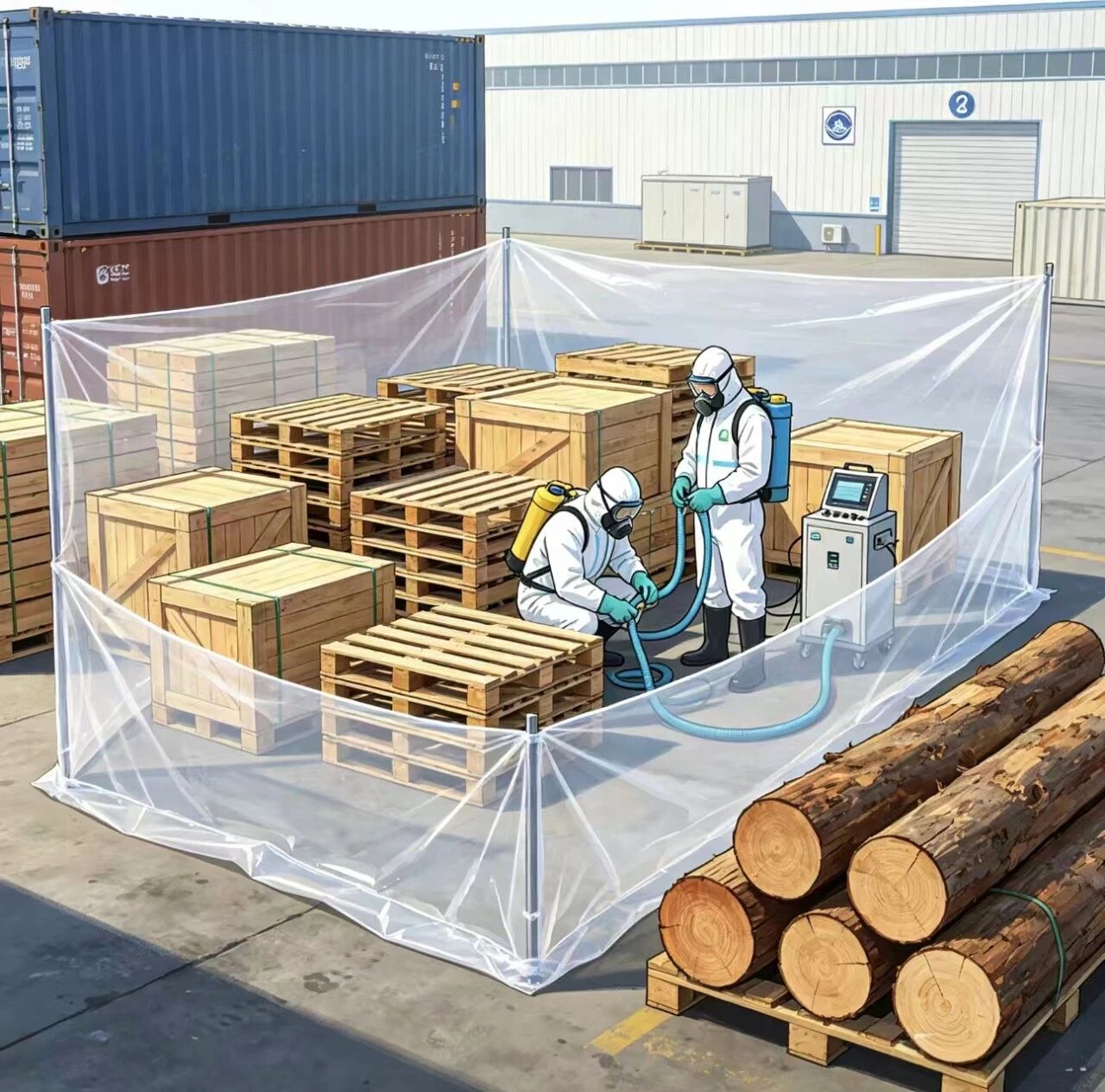
The differences between the two in terms of mechanism of action, target pests, and environmental regulations are outlined below:
1. Mechanism of Action and Efficacy
| Dimension | Methyl Bromide | Sulfuryl Fluoride |
|---|---|---|
| Mechanism of Action | Attacks respiratory enzymes and proteins. | Disrupts energy supply (interrupts ATP production). |
| Target Pests | Simultaneously eliminates all insect life stages (adults, larvae, pupae, eggs), nematodes, and fungal spores. | Primarily targets adults and larvae; weaker ovicidal and fungistatic effects. |
| Operational Scenarios | Very low water solubility; does not hydrolyze in water. Suitable for high-moisture logs, bark-on timber, and fresh root crops such as ginger and garlic. | Rapidly hydrolyzes in water and loses efficacy; operations strictly prohibited in rainy weather. Fumigant concentration drops quickly in moist cargo interiors. |
| Pest Resistance | After nearly a century of global use, no stable highly resistant pest populations have emerged; long-term performance remains stable. | Resistance continues to increase, requiring higher dosage rates. |
2. Environmental and Regulatory Restrictions
| Dimension | Methyl Bromide | Sulfuryl Fluoride |
|---|---|---|
| Ozone Depletion | Has a high Ozone Depletion Potential (ODP) and is regulated under the Montreal Protocol, but exempted for QPS fumigation. | Does not deplete the ozone layer; ODP of zero. |
| Greenhouse Effect | Very low Global Warming Potential (GWP); minimal climate impact. Atmospheric lifetime of 0.7–0.8 years; rapidly degrades naturally after aeration. | GWP is 4,800 times that of CO₂; atmospheric lifetime of 36 years. Regulated under the EU F-gas Regulation [2]. |
The UN's Methyl Bromide Technical Options Committee (MBTOC) has conclusively stated that no single fumigant or alternative technology currently available can fully cover all operational scenarios of methyl bromide for QPS purposes.
References:
[1] Commission Implementing Decision (EU) 2024/2402 of 12 September 2024 not renewing the approval of sulfuryl fluoride for use in biocidal products of product-types 8 and 18 in accordance with Regulation (EU) No 528/2012 of the European Parliament and of the Council.
[2] Scripps Institution of Oceanography, UC San Diego. Termite Killer Lingers as a Potent Greenhouse Gas, 2009.
https://scripps.ucsd.edu/news/termite-killer-lingers-potent-greenhouse-gas


 Contact